Drywall Repair & Paint Prep
Drywall Repair
in Cypress, TX
Cracks over the doors, nail pops, holes from old anchors or a stain from a leak? We fix the wall so the repair disappears once it is painted.
Get a Free Estimate Call (832) 979-1485Quick Answer
What does a good drywall repair involve?
A patch that shows through the paint is worse than the hole. A repair you cannot see comes down to five steps.
- Find the cause. A leak or a moving crack will come back if only the surface gets fixed.
- Rebuild the wall. Cut out damaged board, patch it and tape the seams in joint compound.
- Feather it out. Thin coats spread wide, sanded between coats, so there is no hump.
- Match the texture. Orange peel or knockdown sprayed to blend with the wall around it.
- Prime it. Fresh compound soaks up paint differently, so it gets sealed first.
Skip any one of these and the patch shows up the first time the sun hits that wall.
Get a Free EstimateDrywall Damage We Fix in Cypress Homes
Most of the calls we get are for the same handful of problems. None of them are hard to fix well, but all of them are easy to fix badly.
- Cracks at door and window corners. Houston area homes move with the soil as it wets and dries. Those cracks tend to start at the corners of openings.
- Nail and screw pops. Small round bumps where a fastener has backed out as the framing shifted.
- Holes. Doorknob strikes, old TV mounts, curtain rods and anchors left behind after a move.
- Water damage. Stains, soft spots or sagging on ceilings after an AC drain, roof or plumbing leak.
- Loose tape and dented corners. Bubbled seams and dinged metal corner bead in hallways and stairways.
Fix the Cause Before the Wall
If a stain is still damp, the leak has to be fixed first. A crack that keeps coming back in one spot can be a sign of movement. That is worth having checked. We will tell you what we see before we patch anything.
How Smooth Is Smooth Enough
The drywall industry grades wall smoothness in levels from 0 to 5. The Gypsum Association sets them out in its GA-214 Levels of Finish standard.
Level 4 is the usual target for painted walls in a home. Seams get tape bedded in compound, then two more coats. Screw heads get three coats. It suits flat paint and light textures.
Level 5 adds a thin skim coat over the whole surface. GA-214 points to it for paint with sheen, dark colors and walls hit by strong side light. Big windows that rake light along a wall are the classic case.
For a repair, the goal is simple. The patch should match the finish level of the wall around it, so nothing stands out.
How We Repair Drywall
- Protect the room. Floors and furniture are covered and the work area is sealed off with plastic.
- Open up the damage. Crumbled or wet board is cut back to solid material. Cracks are opened slightly so compound can grip.
- Patch and tape. Holes get new board with backing. Cracks and seams get paper or mesh tape bedded in compound.
- Build and feather. Several thin coats, each wider than the last, sanded smooth between coats.
- Match the texture. We spray or hand apply texture to blend with the surrounding wall, then let it dry.
- Prime and paint. The repair is primed so the paint looks the same over the patch as it does everywhere else.
Texture Matching Is the Hard Part
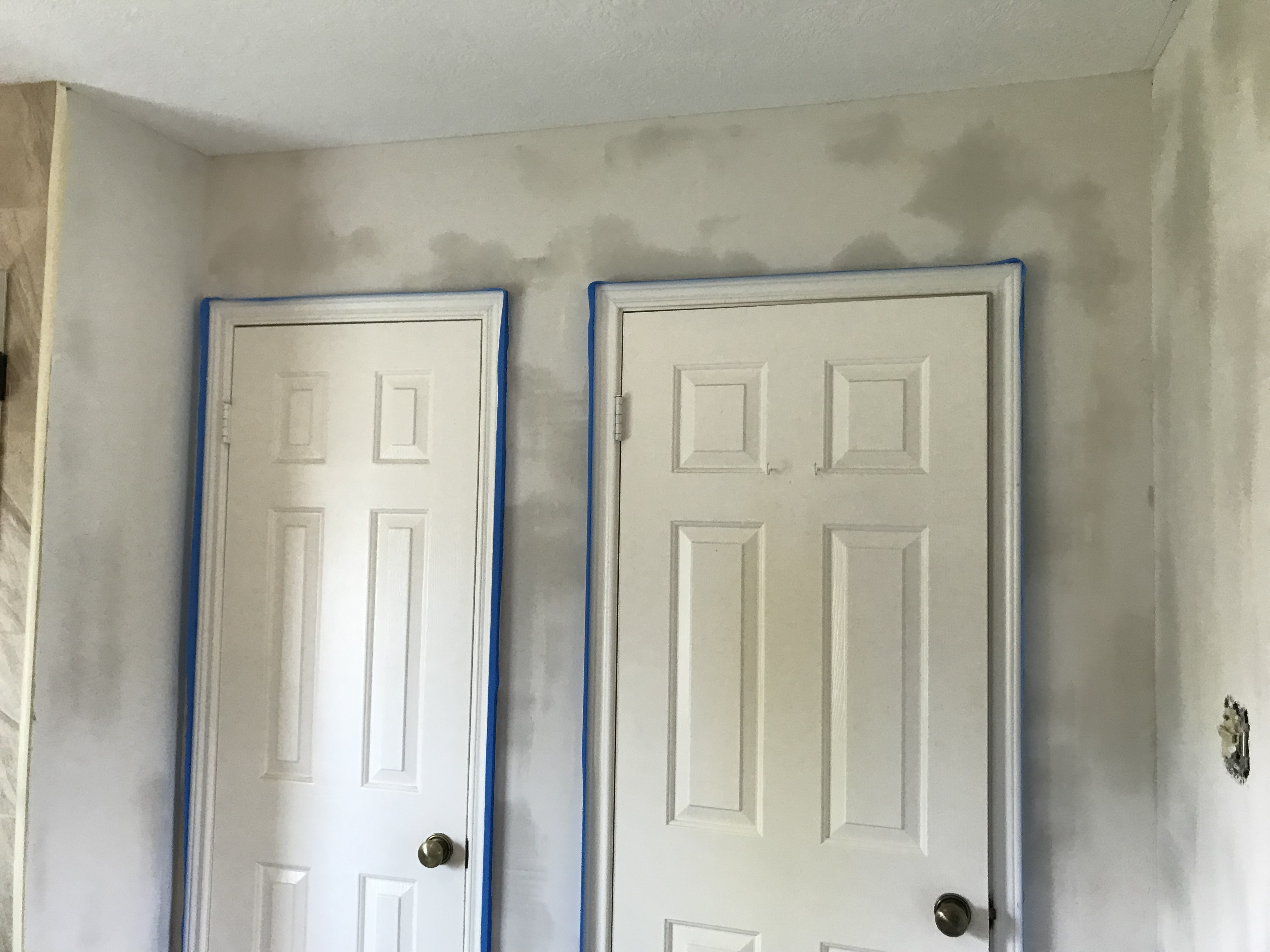
Most Cypress homes have orange peel or knockdown texture on the walls. A smooth patch in the middle of a textured wall stands out as badly as the hole did.
Matching means getting the spray pattern, splatter size and knockdown timing close to the original. We test on scrap board first when a texture is unusual. Then we check the repair with a light held flat to the wall. It shows ridges that paint alone would not hide.
Older Homes Need a Quick Check First
Patching compound and textured paint were made with asbestos in some older homes. The CPSC notes it "may be present in textured paint and in patching compounds." Its use was banned in 1977. Sanding those surfaces can release fibers. The CPSC guide to asbestos in the home has the details.
Homes built before 1978 may also have lead-based paint. The EPA requires lead-safe work practices when that paint is disturbed. Most homes in newer Cypress communities are well past that window. If yours is not, we talk it through before any sanding starts.
Repair First, Then Paint
Drywall repair is usually the first step of a bigger job. Once the wall is sound, our crew moves straight to interior wall painting. Water stains overhead are often part of a ceiling painting job.
Bathrooms see more moisture damage than any other room, so we do a lot of repair on bathroom painting jobs. Taking down old wallpaper often tears the drywall underneath, which is why our wallpaper removal service includes repair. You can see the full list of room services on our interior painting page.
Who You Are Hiring
Cypress Supreme Painting is family owned and veteran owned. We have over 30 years of experience in Cypress and northwest Houston. The same crew that repairs your walls paints them. Nobody hands off a patch they will not have to live with.
Drywall Repair Near You
Same crew, same standards, across every community we serve.
Frequently Asked Questions
Can you match the existing texture on my walls?
Yes. Most homes here have orange peel or knockdown, and we match both. For unusual textures we test on scrap board first so the repair blends in.
How long before a drywall repair can be painted?
Small nail holes and dents can be ready the same day. Larger patches and cracks need several coats that dry between each one, so plan on one to two days.
Why does a patch show through new paint?
Fresh compound absorbs paint differently from the rest of the wall, so it looks duller or shinier. That is called flashing. Priming the repair before painting prevents it.
Do you repair water-damaged ceilings?
Yes. Once the leak is fixed and the area is dry, we cut out any soft board and patch it. Then we match the ceiling texture and seal the stain so it does not bleed through.
What if the same crack keeps coming back?
A crack that returns in the same spot is usually movement, not a bad patch. We reinforce it with tape and setting compound. We will also tell you if it looks like something to have checked.
Ready for Walls Without the Patches?
Free estimates across Cypress and northwest Houston. Send us a photo of the damage and we will tell you what it takes.
Call (832) 979-1485

CONTACT US
Call Today: (832) 979-1485
Email: [email protected]
OFFICE HOURS
Mon-Fri: 8am to 5pm
Sat: 12pm to 5pm
Sun: Closed